
Lamifilum Lu, 2025
Lamifilum are characterized by thin and flimsy wings that are not pliable, almost always metallic or transparent.
Type species: Lamifilum metallescens Lu 2025.
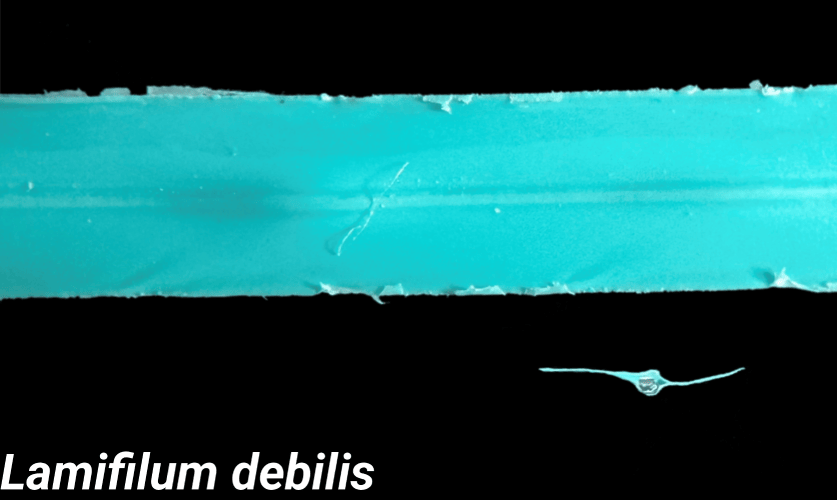
Lamifilum debilis Lu, 2026
Width 0.4cm. Ridge both surfaces, poorly defined. Margins ripped. Wings thin, very weak. Surface matte.
Ecology/Distribution
Ecology unknown. USA.
Description
Lamifilum debilis is an exception in the genus Lamifilum: it’s opaque and matte in coloration! Its membrane is distinctive in its flimsy nature. It often occurs with frayed edges. The epithet “debilis” refers to this characer.
The type specimen is around 19cm long, cyan, and was found by Bailey Z. Lu (NESRG) in a bin of a scrap craft store in Atlanta, Georgia, USA.
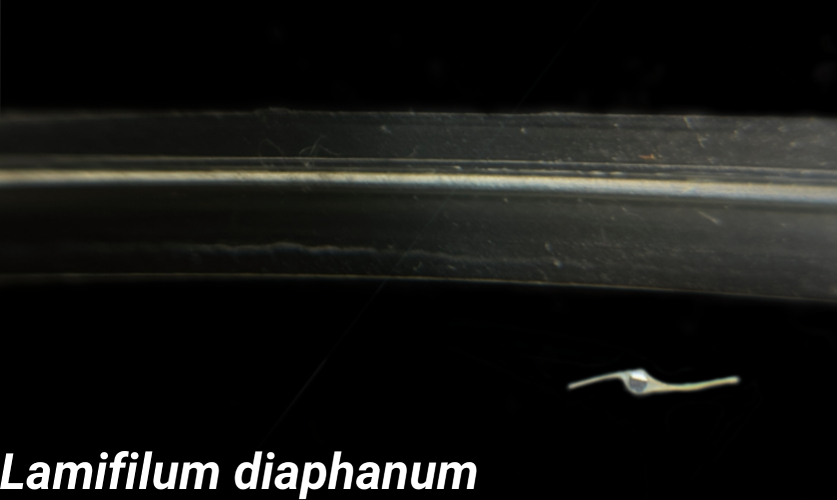
Lamifilum diaphanum Lu, 2025
Width 0.4 cm. Ridge both surfaces, poorly defined. Margins simple. Wings thin, rigid, transparent. Surface glabrous.
Ecology/Distribution
Ecology unknown. USA.
Description
Although very similar to Lamifilum latiargenteum, L. diaphanum has a membrane that is transparent and thick, not easily distorted.
The epithet “diaphanum” refers to the transparent quality of the membrane of the type specimen.
Type: 5.10 cm long. Collected and described by Bailey Z. Lu (NESRG) from a small craft kit in Northern Virginia, USA.
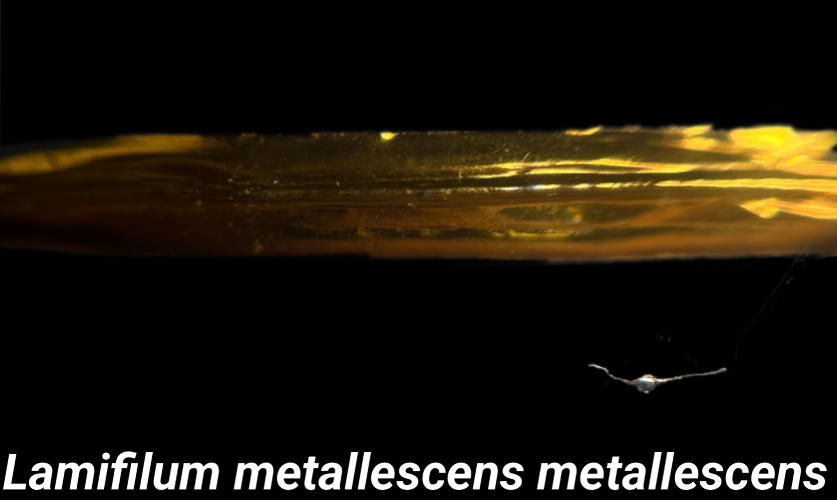
Lamifilum metallescens Lu, 2025
Width 0.3 cm. Ridge both surfaces, poorly defined. Margins simple. Wings thin, weak. Surface metallic, glabrous.
Ecology/Distribution
Many hosts, often baked goods, replacing panids. Cosmopolitan (USA, France, China, Japan, Australia, Hong Kong).
Description
Found on a wide range of hosts, Lamifilum metallescens exhibits a staggering amount of variation comparable only to some species of Dipapyra.
Type: 7.0cm long, golden in color. Collected and described by Bailey Z. Lu (NESRG) from a tangle of tunifilids in Northern Virginia, USA.
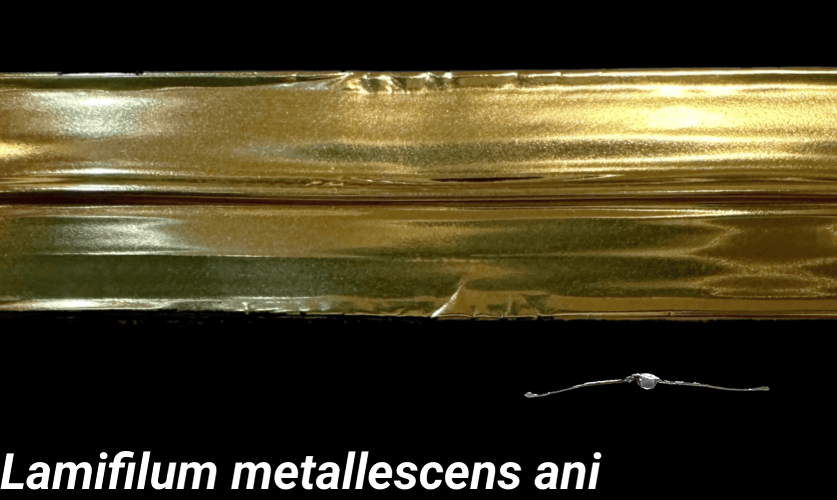
Lamifilum metallescens ani Slembibreytursson, 2026
Width 0.75 cm. Margins simple, inflated/thickened.
Ecology/Distribution
Ecology unknown. Japan.
Description
Lamifilum metallescens ani differs from all other infrataxa of L. metallescens by its inflated edges and width.
The infraspecific epithet “ani” refers to the Japanese term for older brother, 兄 (ani).
Type: Golden in color. Collected by Bailey Z. Lu (NESRG) and described by Aulax ‘Pataplenist Slembibreytursson (NESRG) from a tangle of tunifilids hiding in a drawer, Osaka, Japan.
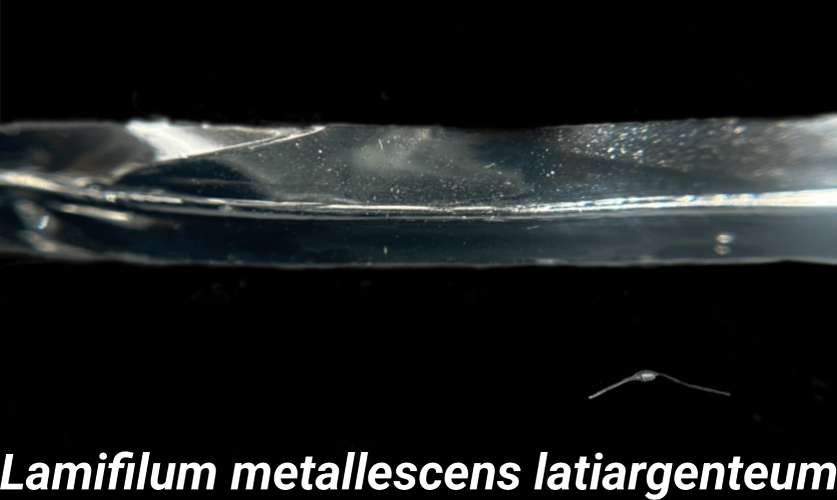
Lamifilum metallescens latiargenteum (Lu, 2025)
Width 0.4 cm.
Ecology/Distribution
Ecology unknown. USA, France.
Description
Wider than Lamifilum metallescens metallescens (0.3 cm). Golden morphs have been found in France.
The epithet “latiargenteum” refers to this species’s width and coloration of the type specimen.
Type: 10.1cm long, silver in color. Collected and described by Bailey Z. Lu (NESRG) from the floor of a Rock and Mineral show in Northern Virgnia, USA.
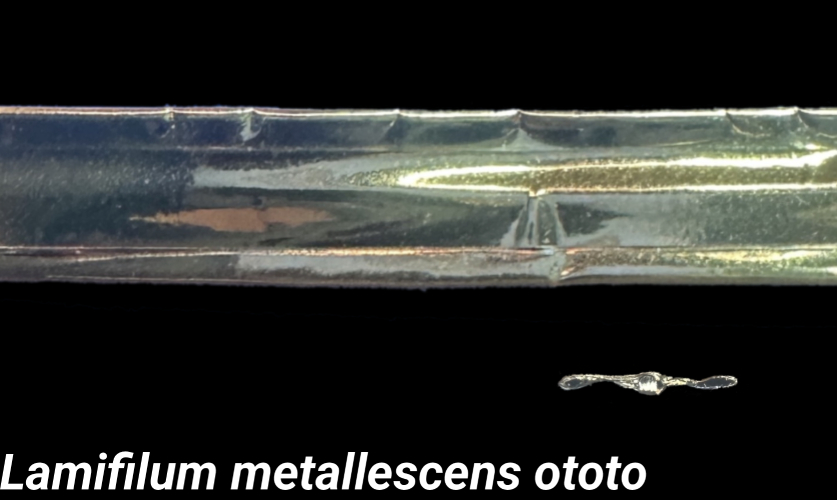
Lamifilum metallescens ototo Slembibreytursson, 2026
Width 0.40 cm. Margins simple, inflated/thickened. Wings robust.
Ecology/Distribution
Plastic packaging (bags). Japan.
Description
Lamifilum metallescens ototo differs from most other infrataxa of L. metallescens by its inflated edges. The only exception to this is L. m. ani, which is much wider.
The infraspecific epithet “ototo” refers to the Japanese term for younger brother, 弟 (ototo).
Type: Collected and described by Aulax ‘Pataplenist Slembibreytursson (NESRG) from a tangle of tunifilids hiding in a drawer, Osaka, Japan.
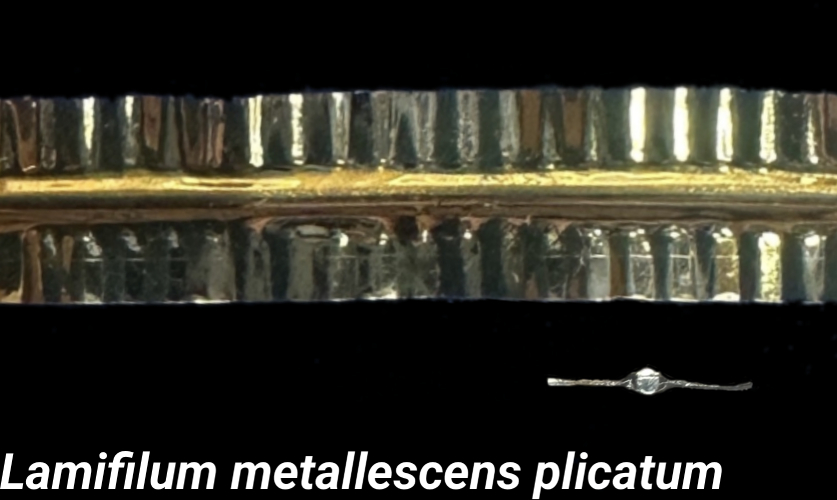
Lamifilum metallescens plicatum Slembibreytursson, 2026
Width 0.40 cm. Wings robust, plicated from edges of ridge to margins.
Ecology/Distribution
Plastic packaging (bags). Japan.
Description
Lamifilum metallescens plicatum differs from all other infrataxa of L. metallescens by its plicated (folded) membrane. Only occasionally are there specimens with folds interrupted in short sections of the body. Specimens have often been observed on gift and snack bags in Japan.
The infraspecific epithet “plicatum” refers to the quality of the membrane.
Type: Collected and described by Bailey Z. Lu (NESRG) from a bag of shrimp chips in Osaka, Japan.

