
Family Hemipapyridae is characterized by both surfaces of the body being composed of plastic, with one side covered by an additional paper layer.
Hemipapyrus Lu, 2025
Hemipapyrus are often found heavily contorted, with the additional paper membrane of the superior surface often flaking off.
Type species: Hemipapyrus fragilis Lu, 2025
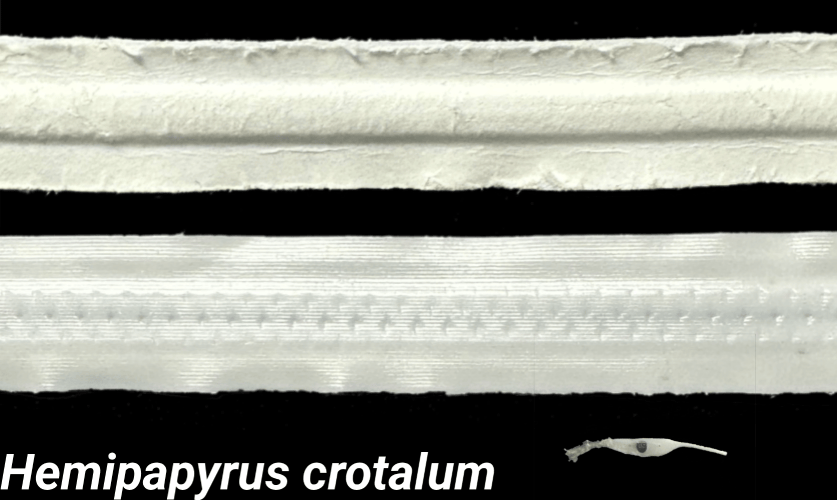
Hemipapyrus crotalum Lu, 2026
Width 0.635 cm. Ridge superior surface only, with alternating diamond-shaped indentations on the inferior surface. Margins simple. Wings thin, lightly striated on inferior surface only. Surface glabrous, paper membrane on superior surface.
Ecology/Distribution
Unknown. USA.
Description
Hemipapyrus crotalum is similar to H. tabulatus, but is distinguished from it by the presence of an alternating pattern of diamonds on the inferior surface. The epithet “crotalum” refers to this pattern, as it may resemble some members of the rattlesnake genus Crotalus.
Type: 25.30 cm long, white. Collected and described by Bailey Z. Lu (NESRG) from a bin of a scrap craft store in Atlanta, Georgia, USA.
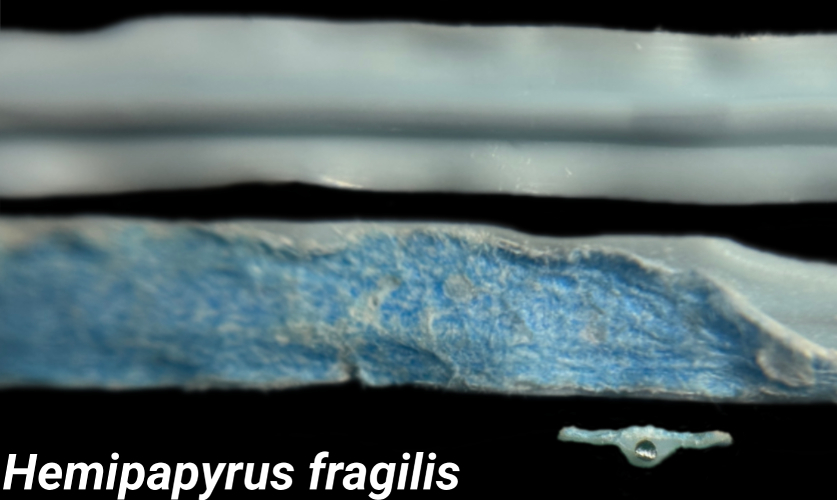
Hemipapyrus fragilis Lu, 2025
Width 0.30 cm. Ridge superior surface only. Margins simple. Wings thick, lightly striated on superior surface only. Surface glabrous, paper membrane on inferior surface.
Ecology/Distribution
Various food products, commonly on bread. USA.
Description
Type: 10 cm long, light blue. Collected and described by Bailey Z. Lu (NESRG) from various food products, Northern Virginia, USA.
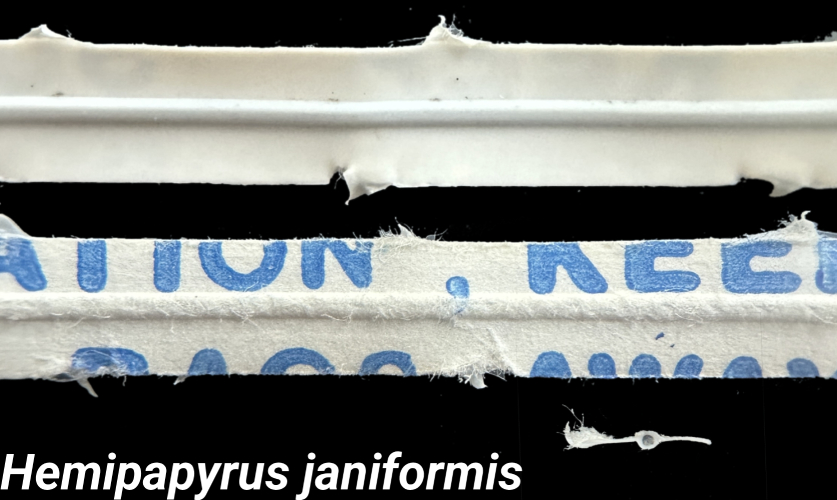
Hemipapyrus janiformis Lu, 2026
Width 0.40 cm. Ridge both surfaces. Margins with periodical tufts of paper. Wings thin. Surface matte, paper membrane on one surface.
Ecology/Distribution
Unknown. USA.
Description
This is currently the only Hemipapyrus with a central ridge on both surfaces.
Type: 13 cm long, off-white with blue lettering. Collected and described by Bailey Z. Lu (NESRG) from a bin of a scrap craft store in Atlanta, Georgia, USA.
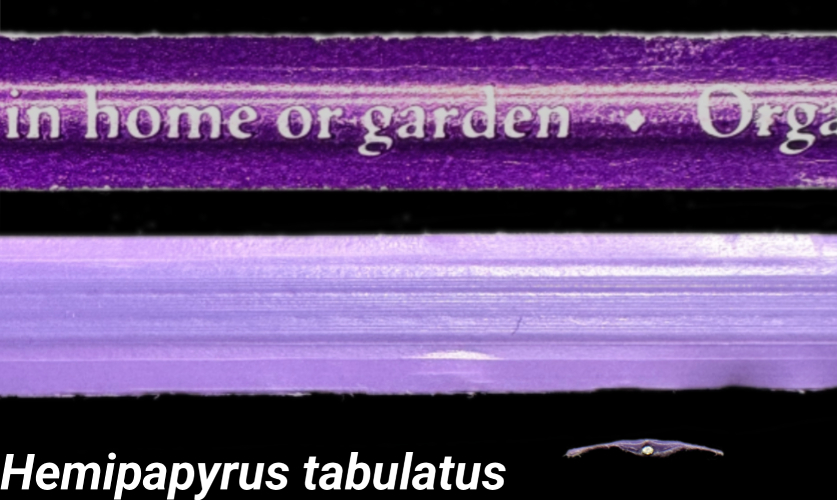
Hemipapyrus tabulatus Lu, 2025
Width 0.635 cm. Ridge superior surface only, raised and flattened on inferior surface. Margins simple. Wings thin. Surface glabrous, paper membrane on superior surface only, lightly striated on inferior surface.
Ecology/Distribution
Various vegetables. USA.
Description
Type: 50.3 cm long, purple. Flag 5.08cm x 7.62cm and attached to the superior surface. Collected and described by Bailey Z. Lu (NESRG) from various Cal-Organic vegetables in Northern Virginia, USA.
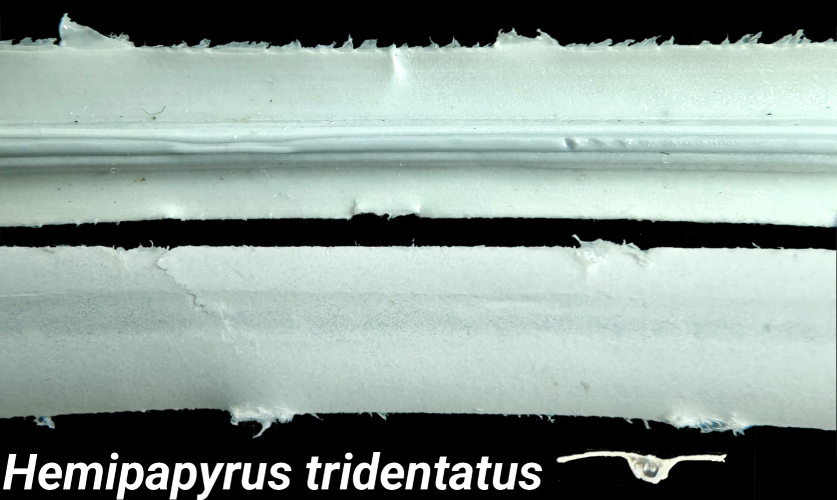
Hemipapyrus tridentatus Lu, 2026
Width 0.50 cm. Ridge on superior surface only, trifurcated in cross section. Margin rough, with periodical tufts of paper. Wings thin. Surface matte, glabrous paper membrane on inferior surface only.
Ecology/Distribution
Unknown. USA.
Description
Weaker than H. fragilis, but best identified by its distinctive trilobed ridge.
Type: 15.20 cm long, white. Collected and described by Bailey Z. Lu (NESRG) from a bin of a scrap craft store in Atlanta, Georgia, USA.

