
Family Geminiplastidae is characterized by both surfaces of the body being composed of plastic.
Biferrovium Lu, 2025
Biferrovium is characterized by two central cores not adjacent to each other. In other words, it is distinctive for the presence of a central membrane, and wings may or may not be present.
Type species: Biferrovium trabeolatum Lu, 2025
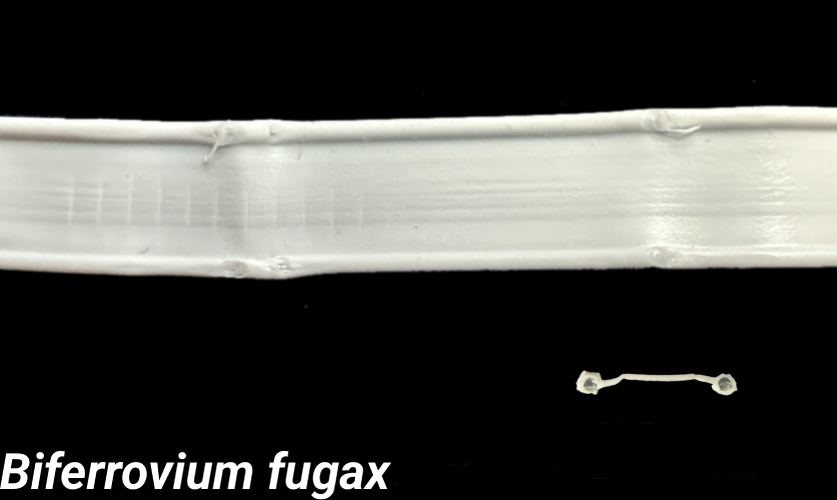
Biferrovium fugax Lu, 2026
Width 0.79 cm. Ridges both surfaces, at margins. Central membrane with faint parallel striations, occasionally with faint transverse indentations that may fade in and out. Wings absent. Surface matte.
Ecology/Distribution
Mostly on food products. cosmopolitan (US, Europe, Asia).
Description
Biferrovium fugax is characterized by its rather simple central membrane compared to B. trabeolatum, which is closely allied to this species. B. fugax is likely a species of cosmopolitan distribution, having been found across the US, Europe, and portions of Asia.
The epithet “fugax” refers to the transient and weak quality of the transverse indentations sometimes found on its central membrane.
Type: 5 cm long, white. Collected and described by Bailey Z. Lu (NESRG) from around a loaf of bread in Northern Virginia, USA.
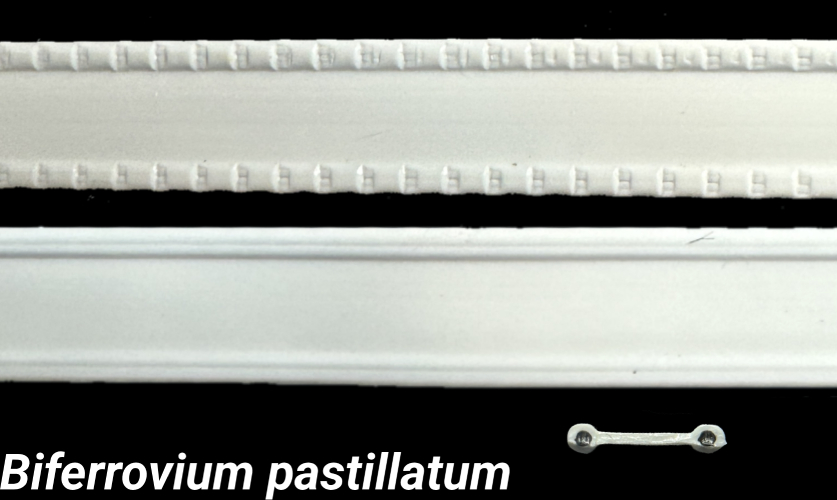
Biferrovium pastillatum Kurisu, 2026
Width 0.50 cm. Ridge both surfaces. One surface has periodical rectangular indentations, and the other is bifurcated. Wings absent. Central membrane thick, inflexible. Surface matte.
Ecology/Distribution
Inside face masks. Hong Kong.
Description
Biferrovium pastillatum is distinctive for the presence of periodical indentations on one surface of the ridges, which are trifurcated in the depressed regions. This species can be differentiated from B. fugax by the presence of markings and from B. sanatorium by the absence of undulating markings on the ridges.
The epithet “pastillatum” refers to this species’s ridges, which are reminiscent of the crimped edges of a pastry.
Type: White. Collected and described by Kurisu (HELO) from inside a face mask, Hong Kong.
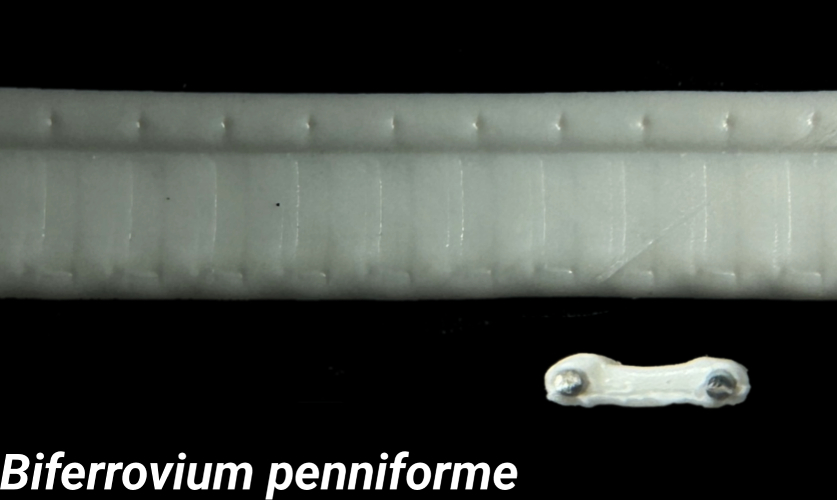
Biferrovium penniforme Kurisu, 2026
Width 0.30 cm. Ridge both surfaces, only one core with a ridge. Periodical indentations on one surface. Wings absent. Central membrane thick, inflexible, with periodical depressed rectangles on one surface. Surface rough.
Ecology/Distribution
Inside face masks. Hong Kong.
Description
Biferrovium penniforme differs from all other Biferrovium by the presence of only one ridge, and its asymmetrical patterning. Although both cores are present, only one core possesses a ridge. Only one surface of this species presents markings.
The epithet “penniforme” refers to this species’s resemblance to a feather, with the ridge being the rachis and the rest of the tunifilid being the barbs.
Type: White. Collected and described by Kurisu (HELO) from inside a face mask, Hong Kong.
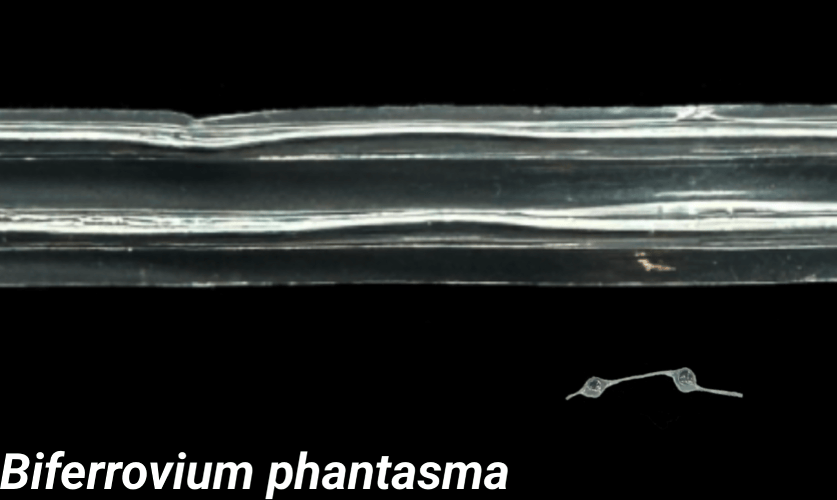
Biferrovium phantasma Lu, 2025
Width 0.60 cm. Ridges both surfaces, separated, poorly defined. Central membrane simple, thin. Wings simple, thin. Surface glabrous, transparent.
Ecology/Distribution
Unknown. USA.
Description
Biferrovium phantasma is distinguished from Biferrovium trabeolatum by its rather simple structure and presence of wings. It is named for its ghost-like appearance due to its thin transparent membrane. It is also often distorted or bent into odd gestures.
Type: ~28.40 cm long, transparent. Collected and described by Bailey Z. Lu (NESRG) from a bin of a scrap craft store in Atlanta, Georgia, USA.
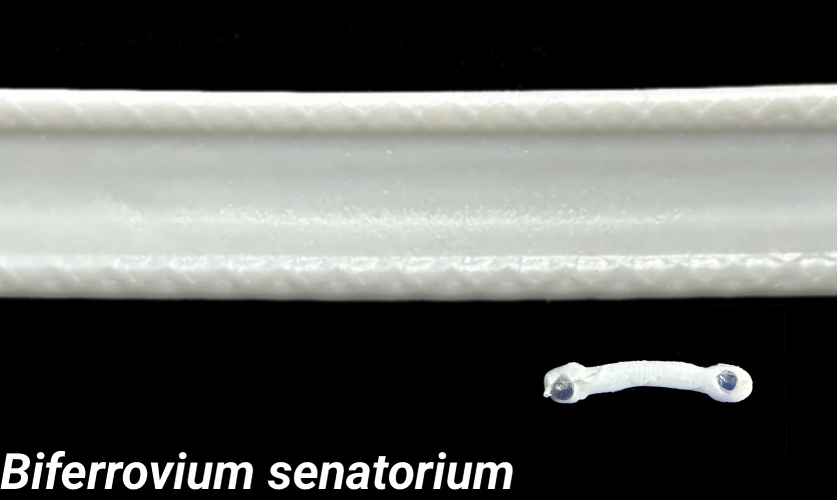
Biferrovium senatorium Lu 2026
Width 0.51 cm. Ridges both surfaces, at margins, with an undulating raised ridge. Wings absent. Central membrane thick, inflexible. Surface rough.
Ecology/Distribution
Inside face masks. USA.
Description
Biferrovium senatorium is characterized by its ornamented ridges and rough surface. It is most similar to Biferrovium fugax, but differs in the characters mentioned previously. This species was first found within a face mask collected in the Virginia senators’ office in the District of Columbia, United States of America.
The epithet “senatorium” refers to the discovery of this species, which was collected in a rather odd environment.
Type: Collected and described by Bailey Z. Lu (NESRG) from inside a face mask in the District of Columbia, USA.
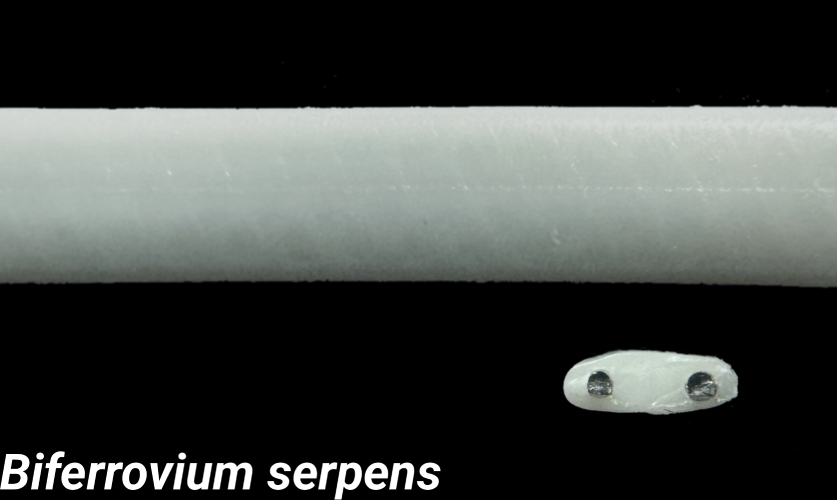
Biferrovium serpens Kurisu, 2026
Width 0.30 cm. Ridges absent. Wings absent. Central membrane heavily thickened, with a slightly textured cross-hatching pattern on one surface. Surface matte.
Ecology/Distribution
Inside face masks. Hong Kong.
Description
Biferrovium serpens is the only species of Biferrovium with no ridges present. The origin of this heavily reduced morphology is currently unclear, and requires further investigation. It could be similar to Acrista, where the entire body is composed of only ridges, or it could be a complete absence of ridges, where the entire body is composed of an enlarged central membrane.
The epithet “serpens” refers to the textured membrane of this species and unique shape, which appear similar to that of a snake.
Type: White. Collected and described by Kurisu (HELO) from inside a face mask, Hong Kong.
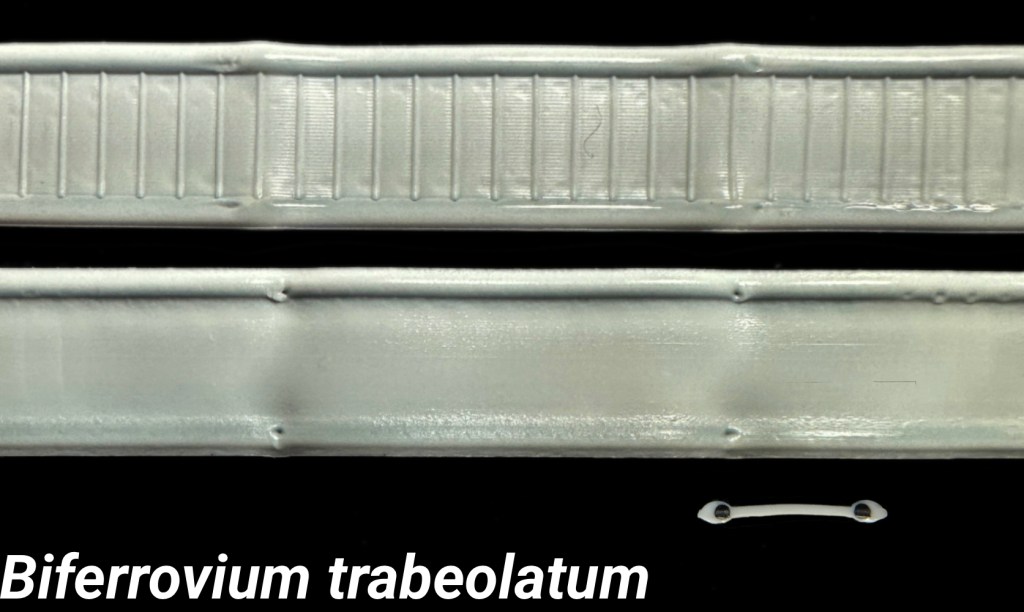
Biferrovium trabeolatum Lu, 2025
Width 0.79 cm. Ridges both surfaces, separated. Central membrane with raised transverse markings and smaller parallel striations on one surface. Wings absent. Surface matte, thick, rigid.
Ecology/Distribution
Baked goods. USA.
Description
Type: 5cm long, white. Collected and described by Bailey Z. Lu (NESRG) from bags of bread, Northern Virginia, USA.
Pseudocrassifilum Beaverskull, 2025
Pseudocrassifilum is characterized by two central cores adjacent to each other, often closely resembling Crassifilum.
Type species: Pseudocrassifilum minimum Beaverskull, 2025
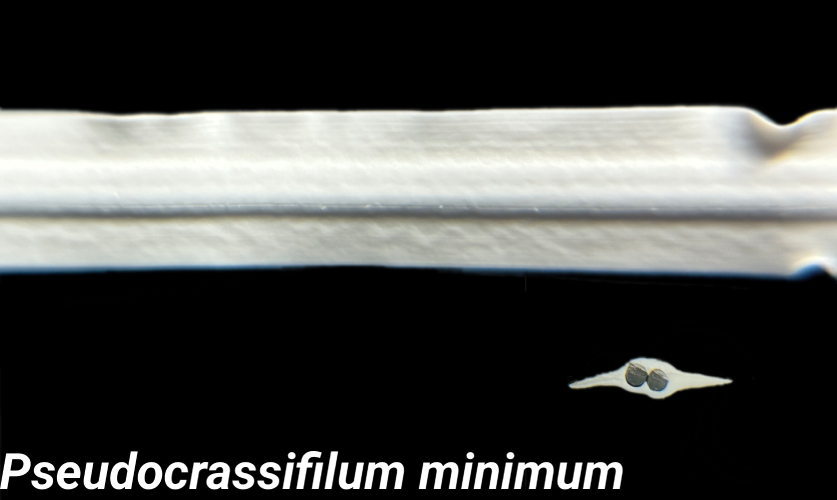
Pseudocrassifilum minimum Beaverskull, 2025
Width 0.3 cm. Ridges both surfaces, clustered. Wings simple, tapering outwards. Surface matte.
Ecology/Distribution
Baked goods. USA.
Description
Type: 11 cm long, white. Type collected and described by Dorian Marquez Beaverskull (NESRG) from Madi Gran Panettone cake, Northern Virginia, USA.

